
Winter Storm Warning — What It Means, How Serious It Is, and What Happens to Schools
A Winter Storm Warning means hazardous winter weather is expected or already occurring in an area. The threat may come from heavy snow, sleet, freezing rain, ice, strong winds, or a combination of winter hazards.
For parents and students, a warning is important because it can affect travel, school transportation, and daily activities. However, a Winter Storm Warning does not automatically mean schools will close. School districts and transportation officials make that decision based on local conditions and safety.
The meaning of winter weather alerts also varies between countries. The United States mainly uses National Weather Service warnings, watches, and advisories, while Canada’s system combines alert types with yellow, orange, and red colours to communicate potential risk.
What Is a Winter Storm Warning?
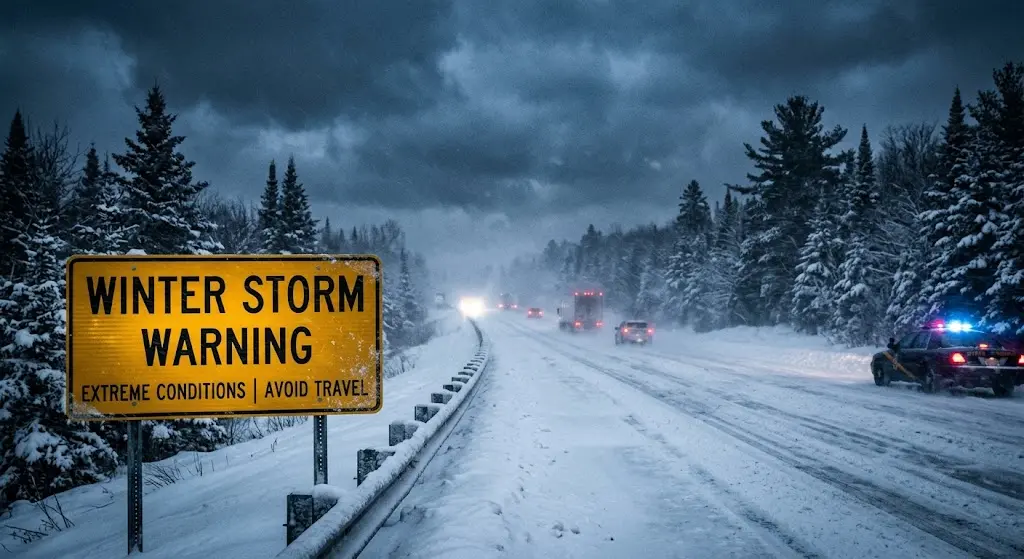
A Winter Storm Warning is an official alert for significant winter weather that is expected or occurring and may create dangerous conditions.
Depending on the location and storm, it can involve:
- Heavy snow or sleet
- Freezing rain or significant ice
- Blowing snow
- Strong wind Chill
- Dangerous travel conditions
- A combination of winter hazards
In the United States, the warning is issued by the local National Weather Service forecast office using criteria appropriate for that region. This is important because there is no single snowfall amount that triggers a Winter Storm Warning everywhere in the country.
In Canada, Environment and Climate Change Canada uses an impact-based alert system in which the alert title identifies the colour, alert type, and weather hazard.
How Serious Is a Winter Storm Warning?
A Winter Storm Warning should be treated as a take-action alert, but the actual danger depends on the hazard and its expected impact.
For example, heavy snow may make roads difficult to travel, while freezing rain can create a layer of ice even when snow accumulation is limited. Strong winds can also blow existing snow across roads and sharply reduce visibility.
The most important question is therefore not simply “How many inches of snow?” but “What conditions are expected where I live?”
A storm can become especially disruptive when several hazards occur together, such as snow combined with ice, wind, or poor visibility.
What Triggers a Winter Storm Warning?
There is no universal snowfall threshold for all locations.
Snow and Sleet
Snow or sleet can lead to a warning when forecast amounts or expected impacts meet the local warning criteria. Those criteria can differ substantially between regions because communities have different climates, terrain, and normal winter conditions.
Freezing Rain and Ice
Freezing rain is particularly dangerous because it can create slippery roads and sidewalks and add weight to trees and power lines.
Wind and Blowing Snow
Wind can move falling or existing snow, producing drifting and rapidly changing road conditions. When strong winds and severely reduced visibility meet the required conditions, a separate Blizzard Warning may be issued.
Visibility and Travel Conditions
Forecasters consider how the expected weather will affect transportation and public safety. A winter event does not have to produce record snowfall to create major travel problems.
Why Warning Criteria Differ by Region
Local NWS offices establish criteria appropriate to their forecast area. For example, an amount considered warning-level in one part of the United States may not be enough in another. Official NWS pages show these regional differences.
Winter Storm Warning vs Watch vs Advisory
| Alert | Meaning | What It Means for You |
| Winter Storm Watch | Significant winter weather is possible | Prepare and monitor updates |
| Winter Storm Warning | Hazardous winter weather is expected or occurring | Take action and follow safety guidance |
| Winter Weather Advisory | Winter weather may cause significant inconvenience or travel problems but does not meet local warning criteria | Use caution and adjust plans |
A watch is about potential, while a warning indicates that hazardous conditions are expected or occurring. An advisory represents a lower level of expected impact under the local criteria.
Winter Weather Alerts in the USA
The U.S. National Weather Service uses different products for different winter hazards.
Winter Storm Warning
This covers significant winter weather that meets the warning criteria for the local forecast area. It may involve snow, sleet, ice, or combinations of hazards.
Winter Storm Watch
A watch means conditions are favorable for a significant winter storm to develop or reach warning-level criteria. It is mainly a signal to prepare and keep checking forecasts.
Winter Weather Advisory
An advisory is used when snow, sleet, ice, or other winter conditions are expected to create travel difficulties but remain below local warning criteria.
Blizzard Warning
A Blizzard Warning is specifically associated with strong winds, falling or blowing snow, and severely reduced visibility. NWS commonly defines blizzard conditions using winds of at least 35 mph and visibility of one-quarter mile or less for at least three hours.
Ice Storm Warning
An Ice Storm Warning is used when significant freezing-rain ice accumulation is expected according to the local criteria.
Snow Squall Warning
A Snow Squall Warning is different from a Winter Storm Warning. It covers a short-duration, intense burst of snow that can rapidly reduce visibility and create dangerous driving conditions.
Extreme Cold Warnings
Extreme cold can also generate separate cold-weather alerts when temperatures or wind chills reach locally defined warning levels.
Winter Weather Alerts in Canada
Environment and Climate Change Canada (ECCC) uses three main alert types:
- Warnings
- Advisories
- Watches
Since November 2025, these alert types are also colour-coded yellow, orange, or red to communicate the potential level of risk.
Winter-related Canadian alerts can identify hazards such as:
- Winter storms
- Snowfall
- Blizzard conditions
- Freezing rain
- Snow squalls
- Extreme cold
- Flash freeze
- Blowing snow
The exact alert depends on the hazard and expected impact.
What Do Yellow, Orange, and Red Weather Warnings Mean?
The colours are part of Canada’s current impact-based alert system.
Yellow Weather Alert
A yellow alert indicates hazardous weather that may cause moderate, localized, or short-term impacts. It is the most common alert colour.
Orange Weather Alert
An orange alert indicates a higher-risk situation where significant impacts are likely. Impacts may be major, widespread, or last for several days.
Red Weather Alert
A red alert is used for very dangerous weather with the potential for extreme, widespread, and prolonged impacts. Red alerts are rare.
The colour is determined using both forecast confidence and potential impact. That is why the complete alert message matters more than the colour alone.
For example, a Canadian alert may appear as “Orange Warning – Blizzard.” The colour shows the potential risk, while “Warning” identifies the alert type and “Blizzard” identifies the hazard.
Are Yellow, Orange and Red Warnings Used the Same Way in the USA and Canada?
No.
In Canada, yellow, orange, and red are official parts of the current weather-alert system.
In the United States, the NWS does not use yellow, orange, and red as universal warning levels for winter weather. Instead, people generally see products such as Winter Storm Watch, Winter Storm Warning, Winter Weather Advisory, Blizzard Warning, and Ice Storm Warning.
So if you are checking a weather alert, always read the actual alert title and detailed message for your location rather than trying to translate one country’s colour system directly into the other country’s terminology.
Does a Winter Storm Warning Mean Schools Will Close?
No. A Winter Storm Warning does not automatically close schools.
The school district or local education authority normally considers how the forecast will affect students, staff, buildings, and transportation.
Important factors can include:
- Road and parking-lot conditions
- Ice accumulation
- Visibility during travel
- School bus safety
- Storm timing
- Expected conditions during arrival and dismissal
- Power outages
- School building conditions
- Local transportation and safety policies
A warning is therefore an important weather signal, not a school-closure announcement.
Why Can One Area Close Schools While Another Stays Open?
Two communities can experience the same storm system but have very different local conditions.
For example, one area may have cleared major roads quickly, while another may still have untreated rural roads or icy secondary routes.
School officials may also consider:
- Local road infrastructure
- Snow-removal resources
- Rural and urban route differences
- Bus availability
- Local terrain
- The timing of the worst weather
- Conditions expected later in the day
This is why there is no universal rule such as “Winter Storm Warning = school closed.”
How Winter Storm Warnings Affect School Buses
School buses can face different risks from ordinary passenger vehicles.
Transportation officials may need to assess:
- Icy roads
- Untreated side roads
- Bridges and elevated surfaces
- Rural routes
- Poor visibility
- Snow-covered roads
- Whether buses can safely complete their routes
A main highway may be reasonably clear while smaller roads on a school bus route remain hazardous. In some situations, transportation difficulties can continue after the main storm has passed.
What Should Parents Do When a Winter Storm Warning Is Issued?
Before the Storm
Read the official alert and check the latest local forecast. Also monitor your school district or school board for announcements.
Before Leaving for School
Check whether the school is open and whether transportation is operating normally. If conditions have changed overnight, use the latest information rather than relying on yesterday’s forecast.
During the Storm
Avoid unnecessary travel when conditions are dangerous. If travel is necessary, follow local weather and road-safety guidance.
After the Warning Ends
Do not assume that everything immediately becomes safe. Roads can remain slippery because of refreezing, compacted snow, ice, or untreated surfaces.
What Happens After a Winter Storm Warning Ends?
The end of a warning means that the specific warning period has ended; it does not guarantee that every hazard has disappeared.
Remaining problems can include:
- Refreezing water
- Black ice
- Snow-covered sidewalks
- Poor road conditions
- Downed trees or power lines
- Delayed transportation
- Cold temperatures
This is particularly important for schools because transportation conditions may still be unsafe even when the official weather alert has expired.
Winter Storm Warning Timeline: From Forecast to School Decision
A winter event can develop through several stages:
Early forecast → increasing confidence → watch or early alert → warning → forecast updates → road assessment → school or bus decision
The timing is not identical everywhere. Some school districts make decisions the evening before, while others may update families early in the morning after reviewing overnight conditions.
The important point is that the weather warning and school decision are separate processes.
Winter Storm Warning in the USA vs Canada
| USA | Canada |
| National Weather Service (NWS) | Environment and Climate Change Canada (ECCC) |
| Local forecast offices issue alerts | ECCC issues national weather alerts |
| Warnings, Watches and Advisories | Warnings, Advisories and Watches |
| Local criteria vary by forecast area | Impact-based colour-coded alert system |
| Yellow/orange/red are not universal NWS winter warning levels | Yellow, orange and red communicate potential risk |
| School decisions are made locally | School decisions are made by local education authorities |
Both countries aim to communicate hazardous weather, but the terminology and alert structure are not identical.
How to Check Whether a Winter Storm Could Affect Your School
If a winter storm is approaching, use more than one source:
- Official weather alert for your location
- Latest local forecast
- School district or school board announcement
- School transportation updates
- Local road conditions
- Snow or weather prediction tools
A Snow Day Calculator can provide an additional estimate of how weather conditions may affect the possibility of a school disruption, but it does not make official school-closure decisions.
Conclusion
A Winter Storm Warning is an official signal that significant winter weather may create hazardous conditions in your area. The exact threat depends on the type of precipitation, wind, visibility, timing, and local conditions.
For parents, the safest approach is to combine the official weather alert with current school, transportation, and road information. A weather warning can indicate the potential for disruption, but the final school decision belongs to the local school authority.